









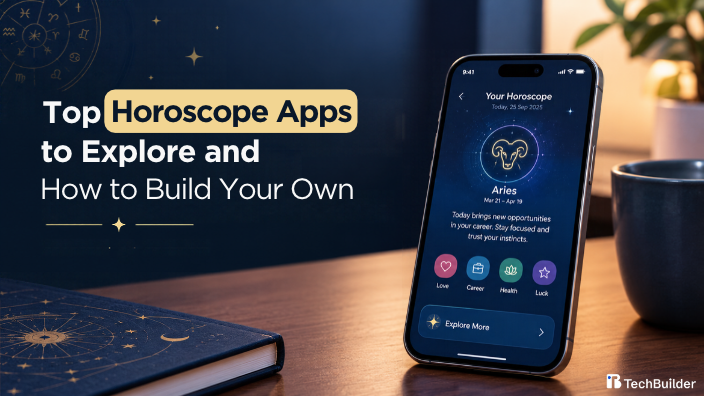
Horoscope apps have changed how people access astrology content. Instead of waiting for a newspaper horoscope or booking a consultation, users can check daily predictions, explore birth charts, compare relationship compatibility, and receive personalized readings directly on their phones. Some apps focus on zodiac-based content, while others offer detailed astrological charts, community features, or consultations with professional astrologers.
For businesses, this creates opportunities to build products for specific audiences rather than compete with every existing astrology platform. A horoscope app could serve beginners looking for simple daily predictions, users interested in detailed birth charts, or people seeking personalized guidance. Understanding the top horoscope apps, their core features, and their monetization strategies provides a useful starting point before investing in horoscope app development.
Looking to Hire App Developers in the UK?
Find the right development expertise to turn your mobile app idea into a high-quality digital product.
Top Horoscope Apps to Know About
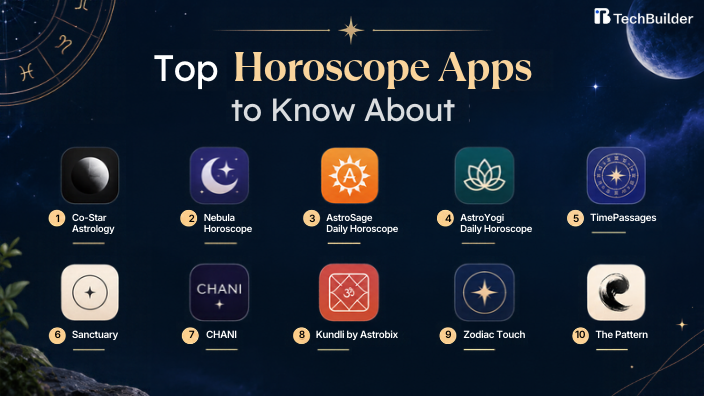
The best app for a user depends on the type of astrology experience they prefer. Some prioritize personalized birth-chart interpretations, while others focus on daily horoscopes, astrological education, or consultations. The following apps offer useful reference points for businesses planning their own products. Features and subscription availability can change by platform and region, so check the current app listings before publishing a definitive comparison.
1. Co–Star Astrology
Co–Star focuses on personalized daily horoscopes and natal-chart interpretations, with features for comparing charts and exploring compatibility with friends. Its distinctive editorial style and notification-led experience make it a useful example of how an astrology app can build a recognizable identity and encourage daily engagement.
2. Nebula Horoscope
Nebula combines personalized horoscopes with astrology readings, relationship compatibility, and premium forecasts. Its broader reading experience demonstrates how horoscope apps can offer free content alongside paid personalization and additional guidance.
3. AstroSage Daily Horoscope
AstroSage is a reference point for users interested in Indian astrology, daily rashifal, Kundli, and related Vedic astrology tools. Its focus on traditional astrology features makes it relevant for businesses targeting users who want more than Western zodiac-based predictions.
4. AstroYogi Daily Horoscope
AstroYogi combines daily, weekly, monthly, and yearly horoscopes with services such as astrologer consultations and other spiritual readings. Its service-led model is worth studying if you plan to connect app users with professionals through chat, calls, bookings, or paid sessions.
5. TimePassages
TimePassages stands out for its detailed natal charts, planetary transits, progressions, and compatibility analysis. It serves users who want to explore chart placements and learn the meaning of different astrological factors, making it a useful reference for advanced chart functionality.
6. Sanctuary
Sanctuary is associated with astrology content and access to professional readings. Its consultation-focused approach provides a useful example for businesses considering a hybrid model that combines self-service horoscope content with personalized services from astrologers. Check current service availability and features before publication.
7. CHANI
CHANI brings together astrology readings, birth-chart insights, moon phases, meditations, and reflective practices. Its blend of astrology and wellness content demonstrates how a horoscope app can develop a more focused experience for users interested in self-reflection and daily routines.
8. Kundli by Astrobix
Astrobix focuses on Vedic astrology resources such as Janma Kundali, planetary transits, career forecasts, and traditional astrological reports. It is particularly relevant when researching products for users who prefer detailed Indian horoscope calculations and traditional chart-based interpretations.
9. Zodiac Touch
Zodiac Touch appears in competitor lists for zodiac-oriented astrology experiences. Before treating it as a direct competitor, verify its current app-store listing, availability, and feature set, as public information may be limited. Its inclusion also highlights why competitor research should distinguish active products from older or less widely maintained apps.
10. The Pattern
The Pattern emphasizes personalized insights related to personality, relationships, and life cycles. Its content-led experience is useful to study when planning an app that helps users revisit readings and explore relationship dynamics rather than relying exclusively on daily zodiac forecasts.
What businesses can learn from these apps: Successful product concepts differ in their focus, whether that is personalized readings, traditional Vedic astrology, advanced charts, wellness content, or live consultations. Use these differences to identify an underserved audience and develop a distinct value proposition instead of replicating an existing app feature for feature.
Take Your Mobile App Idea From Concept to Launch
Work with an experienced development team to plan, build, and launch an app that fits your business goals.
What Features Should a Horoscope App Include?
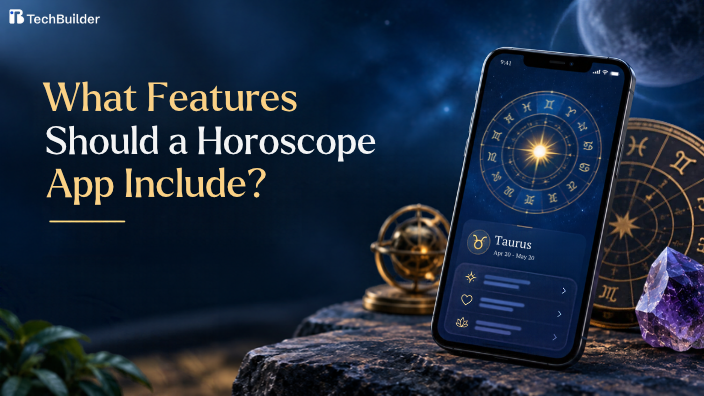
The right feature set depends on whether you want to publish horoscope content, provide detailed astrological tools, or connect users with professionals. Start with features that support the core experience, then expand according to user feedback.
1. Daily, Weekly, and Monthly Horoscopes
Horoscope content is a core feature for apps serving users who want regular updates. Provide predictions by zodiac sign and, where appropriate, personalized readings based on birth-chart information. Organize content into clear categories such as career, relationships, wellbeing, and general guidance so users can find relevant information quickly.
2. Birth Charts and Personalized Readings
Allow users to enter their birth date, time, and location to generate a natal chart. The app can use this information to present planetary placements, zodiac signs, houses, and interpretations, depending on the astrology system you support. Accurate calculations and clear explanations matter more than adding a large number of chart features at launch.
3. Zodiac Compatibility
Compatibility features let users explore astrological interpretations of romantic, friendship, or professional relationships. A basic version might compare zodiac signs, while an advanced feature could use two birth charts to provide more detailed insights. Explain the basis of each reading so users understand what information the app uses.
4. Push Notifications and Personalized Updates
Notifications can remind users when daily readings are available or highlight relevant content. Let users choose which updates they receive and how often. Avoid sending repetitive alerts, since excessive notifications can lead users to disable them or uninstall the app.
5. Premium Content and Subscriptions
Offer optional paid features such as detailed birth-chart reports, extended readings, compatibility reports, or exclusive educational content. Keep the free experience useful enough for users to evaluate the app before subscribing. Clear pricing and easy subscription management help build trust.
6. Astrologer Consultations and AI Features
If your business model includes expert consultations, consider astrologer profiles, availability, bookings, messaging, payments, and session history. AI-powered features can also help users navigate astrology content or ask questions about their charts, responded are grounded in reliable chart data and clearly presented as interpretations rather than facts.
Need Expert Help With Your Next Mobile App?
Whether you’re building for iOS, Android, or both, get development support tailored to your project’s needs.
How to Build a Horoscope App Step by Step
Understanding how to build a horoscope app starts with defining its audience and core purpose. A focused product is easier to test, improve, and market than an app that tries to cover every astrology service from day one.
Step 1. Choose Your Target Audience and App Concept
Decide who you want to serve. Beginners might prefer simple zodiac predictions and easy explanations, while experienced astrology enthusiasts may look for detailed charts, planetary transits, and advanced interpretations. You could also target users interested in Vedic astrology, relationship compatibility, or astrology combined with wellness.
Research the existing apps serving your chosen audience. Identify what users appreciate, what frustrates them, and which features competitors place behind subscriptions. Use these findings to define a clear reason for people to choose your product.
Step 2. Define the MVP and Feature Priorities
Create a minimum viable product (MVP) with the features needed to deliver your main value proposition. For a horoscope app, this could include user profiles, zodiac-based readings, birth details, daily content, notifications, and a basic admin panel for managing content.
Avoid adding consultations, AI predictions, multiple astrology systems, and complex subscription options before validating demand. A smaller first release gives you an opportunity to collect user feedback and understand which features deserve further investment.
Step 3. Select an Astrology Engine and Technology Stack
Your astrology engine determines how the app calculates charts and uses astrological data. You can integrate a third-party astrology API or develop custom calculation logic, depending on your requirements, licensing considerations, and desired level of control.
For the mobile application, technologies such as Flutter or React Native support cross-platform development, while Swift and Kotlin are options for native iOS and Android apps. Your backend may use suitable server-side technologies, a database, and cloud infrastructure to manage accounts, readings, subscriptions, and content. Select the stack based on product requirements rather than popularity alone.
Step 4. Design the User Experience
A horoscope app should make it easy for users to access readings without navigating complicated menus. Build clear onboarding, simple birth-detail forms, readable chart visualizations, and a well-organized home screen.
Personalization should feel useful rather than intrusive. Explain why the app requests birth information, allow users to review or update their details, and provide clear controls for notifications and privacy preferences.
Step 5. Develop and Test the App
Development includes building the mobile interface, integrating the astrology engine, setting up the backend, and implementing the selected features. Test chart calculations against trusted reference data and verify how the app handles missing birth times, different time zones, daylight-saving changes, and invalid inputs.
Also test subscriptions, payment flows, notifications, accessibility, device compatibility, and security. If you include AI-generated interpretations, review the output for consistency, relevance, and unsupported claims before making the feature available to users.
Step 6. Launch, Measure, and Improve
Release the app with analytics that help you understand how people use it. Track onboarding completion, daily active users, reading engagement, subscription conversions, cancellations, and retention over time.
Use this data to improve the experience. If users repeatedly view compatibility readings but rarely open long reports, for example, you might simplify the report format or test a different premium offering. Product improvements should follow observed user needs rather than assumptions about which features will perform best.
How Much Does Horoscope App Development Cost?
The cost of horoscope app development depends on the number of features, platform choice, astrology engine, integrations, design requirements, and level of customization. A simple horoscope app with daily readings costs less to build than a platform with detailed birth charts, AI-powered interpretations, subscriptions, and live astrologer consultations.
Facing Challenges With Your App Development Project?
Get the right technical support to overcome roadblocks, refine your features, and move closer to launch.
For early planning, consider these indicative ranges rather than fixed quotations.
| App type | Estimated development cost | Typical scope |
| Basic horoscope MVP | ₹4 lakh–₹10 lakh | Zodiac readings, profiles, notifications, content management |
| Personalized astrology app | ₹10 lakh–₹20 lakh | Birth charts, personalized readings, subscriptions, analytics |
| Advanced astrology platform | ₹20 lakh–₹40 lakh | AI features, detailed charts, multiple integrations |
| Consultation marketplace | ₹25 lakh–₹60 lakh+ | Astrologer profiles, chat or calls, payments, bookings, admin tools |
These are broad planning estimates based on published 2026 industry guides, not guaranteed market rates. Actual costs vary significantly by scope, development location, technology, and service provider.
Factors That Affect the Development Budget
- Astrology calculations: Third-party APIs may reduce initial development work, while custom calculation logic offers more control but requires additional expertise.
- Platform coverage: Separate native apps often require more development effort than a suitable cross-platform solution.
- AI personalization: AI-generated readings require model integration, data grounding, testing, monitoring, and ongoing usage budgets.
- Live consultations: Chat, voice, video, scheduling, payments, and astrologer payouts add significant complexity.
- Security and maintenance: User data protection, infrastructure, bug fixes, updates, and third-party service fees contribute to long-term costs.
A practical way to manage the budget is to launch with a defined MVP and expand once usage data reveals what users value. Include ongoing operating costs in your business plan rather than considering development the only investment.
How Do Horoscope Apps Make Money?
A sustainable revenue model should fit the value your app provides and the habits of its target audience. You do not need to introduce every monetization method at launch.
- Freemium subscriptions: Offer basic horoscopes for free and charge for advanced chart interpretations, personalized reports, or exclusive content.
- In-app purchases: Sell individual readings, compatibility reports, or downloadable astrology guides without requiring a recurring subscription.
- Astrologer consultations: Earn revenue through bookings or commissions when users pay for consultations with professionals.
- Advertising: Display relevant ads within the free experience, while ensuring they do not disrupt reading or navigation.
- Premium educational content: Offer paid astrology courses, workshops, audio sessions, or learning resources.
For many new horoscope apps, a freemium model provides a practical starting point. You can measure which features attract repeat engagement before deciding whether subscriptions, consultations, or individual purchases deserve greater investment.
Get More Value From Your Mobile App Investment
Build around your users’ needs with the right features, technology, and development strategy.
Privacy and Trust Considerations for Horoscope Apps
Horoscope apps may collect birth dates, birth times, locations, relationship details, and account information. Treat this information carefully, explain why it is collected, and provide clear controls for accessing, updating, or deleting personal data.
Use appropriate security measures, restrict internal access, and review the privacy practices of third-party astrology APIs and analytics services. If the app offers AI-generated readings, explain that these are interpretations rather than guaranteed predictions. Clear communication and responsible data handling help build user trust over time.
Conclusion
Building a successful horoscope app requires more than publishing daily zodiac predictions. The top horoscope apps demonstrate different ways to serve users through personalized readings, detailed birth charts, compatibility tools, and wellness content. Before entering this market, identify your target audience, study competing products, choose the right features, and validate your revenue model. A focused MVP gives you a practical way to test demand before investing in a larger platform.
With a clear product strategy, reliable astrology calculations, thoughtful design, and a sustainable monetization plan, horoscope app development can support a scalable digital product. If you are exploring how to build a horoscope app, TechBuilder can help you plan a solution aligned with your business goals, from defining essential features to choosing the right development approach. Prioritize the features your audience values most, protect user information, and use feedback to guide future improvements.
Your Next Mobile App Starts With the Right Partner
Partner with TechBuilder to transform your business requirements into a scalable mobile application.
Frequently Asked Questions
What is the best horoscope app?
The best horoscope app depends on your needs. Co–Star and The Pattern focus on personalized astrology experiences, CHANI combines horoscopes with wellness content, and TimePassages offers detailed birth-chart and transit tools. Compare features, pricing, privacy, and platform availability before choosing.
How much does it cost to develop a horoscope app?
A basic horoscope app may cost around ₹4 lakh–₹10 lakh, while a personalized astrology platform can cost ₹10 lakh–₹20 lakh or more. Apps with AI features, live consultations, or complex integrations may require ₹20 lakh–₹60 lakh+, depending on scope.
How long does it take to build a horoscope app?
A basic horoscope app may take approximately two to four months to develop. A platform with personalized birth charts, subscriptions, AI features, or live consultations may take four to eight months or longer. Timelines depend on the feature set, integrations, testing, and team size.
What features should a horoscope app have?
Essential features include daily horoscopes, zodiac profiles, user accounts, personalized readings, and notifications. Depending on the target audience, you can add birth charts, compatibility reports, subscriptions, astrologer consultations, and AI-powered interpretations.
Can AI be used in horoscope app development?
Yes. AI can help explain chart information, personalize content, answer astrology-related questions, and recommend relevant readings. However, AI-generated interpretations should be grounded in reliable astrological data, tested for consistency, and presented transparently.
How do horoscope apps generate revenue?
Horoscope apps generate revenue through subscriptions, in-app purchases, advertising, paid reports, and astrologer consultations. The right model depends on the audience and the value of premium features. A freemium approach helps businesses test demand before expanding monetization.