























Why 2026 Is the Best Time to Start a Taxi Business
The taxi market is changing at a faster rate than ever and 2026 is proving to be the right time that the entrepreneur should venture into this market. With the increased urbanization and the increased demand of on-demand mobility and increasing use of mobile applications to travel by people, the potential of profits and long-term development of starting a taxi business is enormous.
The possibilities are limitless whether you plan to operate a classic taxi business or a ride-hailing service, which operates on an application. With knowledge of the market, application of the recent technology and by being systematic anyone can easily acquire how to start a taxi business and develop a successful venture at the very start and make a fortune out of it.
Overview of the Taxi Industry in 2026
Taxi service has been reinvented and changed to the application-based model making transportation more accessible, convenient, and efficient. In the modern world, passengers choose to book tickets online, track their baggage in real-time, and pay without cash, and this is why taxi companies that are technologically advanced gain a competitive advantage.
The industry is projected to expand even higher in the year 2026 due to the following factors:
- High urbanization and population explosion.
- More smartphone penetration and mobile application usage.
- Need to have quality, safe, and cheap transportation.
- Smart operations with AI, GPS, and data analytics.
For beginners wondering how to start a taxi business, understanding these industry trends is crucial. Being aware of the trend of technology based services can assist you in developing a contemporary taxi company that addresses the needs of the passenger, as well as, outmaneuvering competition.
Ready To Turn Your Idea Into A Real Taxi Business?
Talk to our experts and discover how TechBuilder can help you launch a powerful, app-based taxi platform faster and at a lower cost.
Different Taxi Business Models Explained
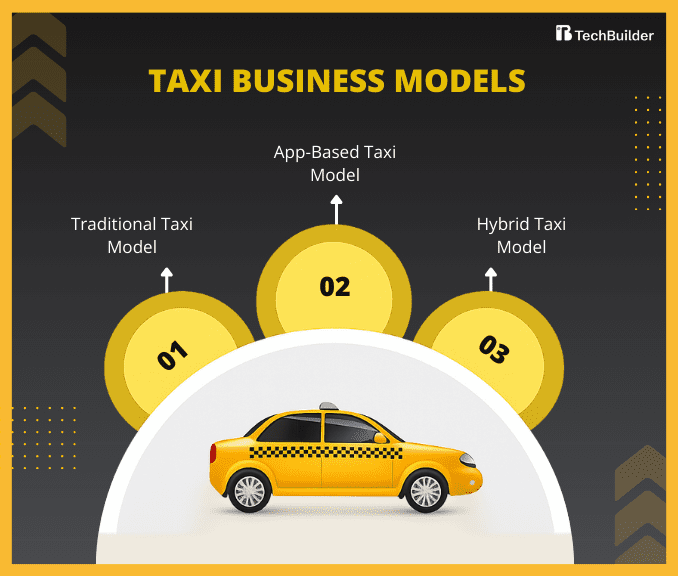
You need to be able to learn how to start a taxi business knowing the different models that you can adopt. The benefits, investment capital, and needs of operation of each model include:
- Traditional Taxi Model:
Here is the traditional version of it, in which you have a fleet of taxis and drive them yourself. You deal with drivers, routes, fares and maintenance. It has a greater initial capital expenditure, but you have complete control over your business.
- App-Based Taxi Model:
This model is based on a mobile application to book a ride and is inspired by such companies as Uber and Careem. People are able to reserve their ride through the Internet, drivers obtain immediate alerts and the payment is made without cash. This is a scalable model that is popular with the contemporary users.
- Hybrid Taxi Model:
The hybrid between conventional and app-based models. You can drive a few cabs by hand and provide app bookings to the technologically savvy customers. This will offer flexibility and slow adoption of digital trends.
The selection of the appropriate model will rely on your budget, your target audience and your long-term business intentions. These are important considerations that one should be aware of in order to develop the process of establishing a taxi business.
Step-by-Step Process on How to Start a Taxi Business
It is very easy to be confused when starting a taxi business, but with a roadmap, even an amateur can translate the business into a lucrative one. Following is a stepwise guide on how to launch a taxi company in 2026:
Step 1: Conduct Market Research
Know the demand of transportation in your city before investing. Determine high traffic routes, high traffic periods, and underserved locations. Research your competitors on how they set their prices, how well they provide their services and how they utilize their technology. Market research assists in identifying a niche either in airport transfers, corporate rides, or commuting in the city.
Step 2: Choose the Right Business Model
Decide between traditional taxis, app-based services, or a hybrid model. Traditional models require more hands-on management, while app-based models offer scalability and convenience. Your choice will affect fleet size, tech investment, and operational processes.
Step 3: Legal Requirements & Licenses:
Compliance is key.Establish a business and get the required licenses and business insurance. Ensure that drivers are well licensed and that they observe the rules of safety. Compliance with the law prevents – penalties and creates credibility among the clientele.
Step 4: Plan Your Fleet and Vehicles
Choose whether to buy or lease your taxis. Choose between fuel cars or electric cars, according to your financial means and Earth policy. Make sure every car is in good condition, insured, fitted with GPS to track and provide security. The fleet planning will have an influence – on your quality of service and profitability.
Step 5: Hire and Train Drivers
Your taxi drivers are your frontline to your taxi business. Recruit skilled and certified drivers, conduct background checks and offer – customer service, safety and app usage training. Happy and professional drivers – improve your brand reputation and customer retention.
Step 6: Develop Technology Infrastructure
In case of an app-based or hybrid model, make an investment in an effective taxi booking platform. Design a passenger app, a driver app, and an administration panel to make bookings, accept payments, and operate the fleet. The current capabilities such as real-time tracking, computers, and automated dispatch enhance the productivity and satisfaction of the customers.
Step 7: Set Pricing and Payment Methods
Decision on competitive fare rates, which is determined through market research and cost of operation. Provide convenient payment methods, such as no cash deal, electronic money, and cards. Open prices and comfort are attracting more customers.
Step 8: Marketing and Launch Strategy
Promote your service before and after launch. Utilize social media promotions, referral, local advertisements and collaborating with hotels or companies. A pilot or a soft launch in one of the selected areas will assist in building the feedback and refining the service prior to extending.
Step 9: Monitor and Optimize Operations
Monitor major indicators within the ride volume, driver performance, and customer feedback. Increase route optimization, change pricing policies and service gaps. The idea of continuous improvement guarantees the smooth functioning and long-term development.
Through these steps, not only do you get to know how to begin with a taxi business but you also form a strong baseline to a successful, scalable, and technology-oriented taxi service.
Want A Clear Cost Estimate And Profit Roadmap For Your Taxi Startup?
Get a free consultation with TechBuilder and see how to start a taxi business with up to 30% lower development cost.
Cost to Start a Taxi Business and Budget Planning
It is essential to know the expenses that a person will incur when starting a taxi business. The following is a cost-by-cost analysis of the expected cost of a small to medium taxi business establishment in 2026:
| Type | Features | Timeline | Market Cost | Cost at TechBuilder |
| Basic MVP | Login, Map Integration, Ride Booking | 3-4 months | $20,000-$40,000 | $14,000-$28,000 |
| Mid-Scale | Live Chat, Multiple Payments, Ride Tracking | 5-7 months | $40,000-$70,000 | $28,000 – $49,000 |
| Advanced | Surge Pricing, Al Matching, Deep Analytics | 8-10+months | $80,000-$150,000+ | $56,000 – $105,000+ |

Revenue Models and Profit Opportunities
When learning how to start a taxi business, understanding how your business will generate revenue is essential. This is a breakdown of the most popular and lucrative outlay designs:
- Per-Ride Commission
The majority of the taxi business makes a living off a percentage of the ride costs. In the case of app-based or hybrid models, this is usually a percentage of 10-25 of the total fare. The higher the number of rides the more revenue you make. Commission-based revenue will guarantee you a constant flow of money and will motivate you to get more riders.
- Driver Subscription Plans
Other taxi companies make taxi business fee payments to their drivers every week or month to have access to your platform or fleet. The model is effective when your service is in great demand or provides great features such as advanced dispatch, tracking, GPS, or guaranteed ride assignment. Subscriptions offer a more stable revenue and minimise reliance on the volume of rides.
- Corporate Contracts and Partnerships
Partnering with local businesses, hotels, or airports can be a lucrative revenue stream. Corporations often need reliable transportation for employees, clients, or airport transfers. Securing long-term contracts ensures regular income and increases brand visibility.
- Surge Pricing During Peak Hours
You can set fares higher – when demand is high like during rush hours, weekends or special occasions. Surge pricing does not only increase revenue, but it also is effective in dealing with demand of rides. The model is particularly useful in taxi businesses that are run using apps.
- In-App Advertising and Promotions
Providing space to local businesses as a means of advertising or marketing partner services, you can make a profit out of your passenger app. The sponsored listings, banner advertisements or time-bound promotions generate additional revenue without interfering with the usual taxi operations.
- Additional Services
Part of Some taxi companies will also diversify their services with high-end services such as airport pickups, outstation trips, or luxury rides. These services are usually charged more leading to greater profitability and a higher quality customer base.
Combining these revenue structures, you can have many revenue streams, which will make your taxi business more sustainable and profitable. The right planning and intelligent implementation is such that novices can easily understand how to start a taxi business and grow with time.
Common Challenges and How to Overcome Them
The initiation of a taxi business is quite lucrative but it is not free of challenges. It is paramount to understand such obstacles and learn how to overcome them when one is planning out how to begin a taxi business.
- High Competition
Competition may be intensive with ride-hailing applications and local taxis. Its competitive advantage should be niche markets, great customer service and use of technology to facilitate smooth operations. You can gain market share by providing differentiated products – such as real-time tracking, loyalty programs or premium rides.
- Driver Retention and Management
High driver turnover is a common issue. To retain your drivers, pay them competitively, allow flexibility in schedules and incentives and training programs. The company culture and effective communication will help to retain the loyalty and enhance the quality of the services.
- Regulatory Compliance
Local laws, permits and taxi regulations are tricky to navigate. Keep yourself informed about the government policies, keep all the licenses, and keep your fleet and drivers in line with the safety requirements. This can be made easier through the collaboration of a legal consultant.
- Operational Costs
The fuel, maintenance and app development and marketing may be a rapid increase. Cost reduction and enhanced profitability can be achieved through efficient fleet management, the adoption of electric vehicles, and route optimization with the use of AI.
- Technological Challenges
In the case of app-based models, glitches, downtime, or bad user experience might send customers away. It is important that we invest in a stable taxi booking application, frequent updates, and 24/7 technical support to make sure the operations run smooth and the customers are satisfied.
With proper planning and responding to such adversities ahead, inactive individuals will be able to learn how to start a taxi business and establish a long-term and sustainable business.
Future Trends in the Taxi Industry
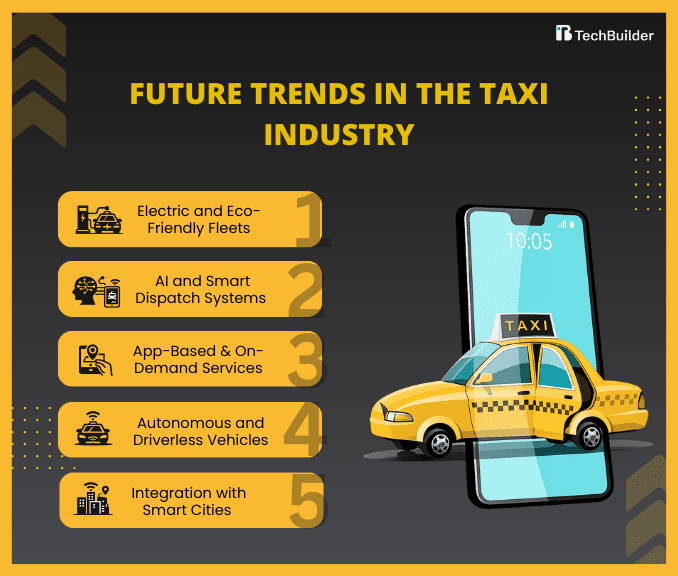
The taxi business is a fast developing one where it is important to remain ahead of the times. Following are some of the market trends that will dominate the market in 2026 and beyond:
- Electric and Eco-Friendly Fleets
Electric vehicles (EVs) are gaining momentum because they have lesser running costs and environmental advantages. Adding EVs to your portfolio will help – to save money, find more environmentally friendly clients, and make your taxi service look progressive.
- AI and Smart Dispatch Systems
Taxi functions are being revolutionized with the help – of artificial intelligence. Intelligent dispatching, predictive analytics, and computerized routing optimization minimize wait-time, enhance efficiency and profitability.
- App-Based & On-Demand Services
Travelers are more likely to use the convenient services based on apps in order to track their positions in real-time and use cashless payments. By investing in an easy to use application, your taxi business is guaranteed to be on track with the current customer demands.
- Autonomous and Driverless Vehicles
Although full autonomous cabs are developing, remaining conscious of this trend will enable companies – to upgrade in the future and keep a competitive advantage.
- Integration with Smart Cities
There is the adoption of smart transport systems in cities. Adding to the application of taxis, public transport, traffic monitoring, and IoT devices may provide improved services and cover more markets.
Entrepreneurs that think ahead of their time by adopting these trends will not only know how to start a taxi business but will have an opportunity to future-proof their business to grow in the long term.
Why Choose TechBuilder for Taxi App Development?
TechBuilder offers end-to-end taxi app development solutions – that help startups and entrepreneurs – launch and scale their business quickly.
- Custom Features for Your Taxi Business
TechBuilder creates customized solutions for your business model, in passenger apps, driver apps and admin dashboards. Also features such as real time tracking, automated dispatch, secure payments and in-app chat will make up a smooth user experience.
- Scalable and Future-Ready Solutions
TechBuilder creates customized solutions for your business model, in passenger apps, driver apps and admin dashboards. Also features such as – real time tracking, automated dispatch, secure payments and in-app chat will make up a smooth user experience.
- Fast Time-to-Market
With TechBuilder, you can launch your taxi company app faster, allowing you to swiftly capture the market and begin producing cash. Effective project management and competent developers will reduce delays and assure timely delivery.
- Ongoing Support and Maintenance
TechBuilder will allow your taxi business application to be online within a shorter time, enabling you to win the market and begin to make money. The time taken is reduced to a minimum and delays are kept at a minimum to ensure that the project is delivered on time through efficient project management and skilled developers.
Partnering with TechBuilder gives you a competitive edge and simplifies the process of how to start a taxi business, ensuring your enture is tech-enabled, profitable, and sustainable from day one.
Start Your Taxi Business Journey Today With TechBuilder.
Get a custom taxi app, scalable technology, and end-to-end support to launch, grow, and dominate your local market in 2026.
Conclusion
The potential of starting a taxi company in 2026 is massive to business people who are willing to embrace the combination of strategy, technology and shrewd operation. With the clear knowledge of the market, the process of selecting the best business model, budget planning, using technology and following modern trends, anyone can easily learn how to start a taxi business and develop a successful enterprise.
Be it a conventional taxi business, a mobile-based business, or a combination of the two, proper planning and implementation are the secret to success. Given the proper advice, resources, and help of professionals such as TechBuilder, it is possible to make your taxi business idea a reality that can thrive.
FAQ’s
Have Questions About How To Start A Taxi Business?
Get clear answers and expert guidance to kickstart your taxi app journey in 2026.
What Are the First Steps in Starting a Taxi Business?
Learning to start a taxi business begins with an elaborate market research. Determine who will be your target audience, competitors, and select the appropriate business model, traditional, app-based, and hybrid, before investing in vehicles and technology.
How Much Does It Cost to Start a Taxi Business?
Initial price of a taxi business depends on the number of vehicles in the fleet, the type of a taxi, and technology. A small fleet needs an average of $25,000-50000 in vehicles, licenses, app creation, marketing and driver salaries. Having appropriate budget planning guarantees long term profitability.
Which Business Model Is Best for a Taxi Startup?
The most effective model would be based on your resources and objectives. Traditional taxis are controlled to the fullest, app-based models are scalable and technologically oriented, and hybrid models are a combination of both. Knowing these alternatives are also important in the way to start a taxi business successfully.
Do I Need a Taxi Booking App to Start My Business?
While traditional taxis can operate without an app, having a taxi booking app is essential in 2026. Applications enhance customer convenience, more bookings, cashless payments, and competitive advantage in the emerging on-demand mobility sector.
How Can I Make My Taxi Business Profitable?
The various sources of revenue that result in profitability include driving an increase in profitability through per-ride commission, driver subscriptions, corporate contracts, surge pricing and premium services. By using a combination of these models, you will be able to get a steady income and expand your taxi business.
What Are the Common Challenges in Starting a Taxi Business?
The main challenges are intense competition, retaining drivers, regulatory compliance, costs of operation and technology. By strategizing wisely, training, and implementing technological solutions, one can counter these in advance, so that it would be successful in the long term.
Can I Start a Taxi Business Without Owning Vehicles?
Yes, it is possible to use leased or partner-owned vehicles that are considered to run a taxi business. This minimizes initial investment and risk of operation. This model is followed by many taxi businesses based on apps, particularly at the initial stages.
Why Should I Partner with TechBuilder for Taxi App Development?
Partnering with TechBuilder makes it easy to understand – how to start a taxi business by providing custom applications, scalability, AI-based dispatch systems, and support.