










What if your next profitable business isn’t about selling cars—but renting them again and again?
From tourists needing a vehicle for a weekend to businesses looking for long-term transportation, the car rental industry continues to create opportunities for entrepreneurs who can offer convenience, flexibility, competitive pricing, and a better customer experience.
The opportunity is significant. The global car rental market was valued at around $149.9 billion in 2024 and is projected to reach nearly $278 billion by 2030, according to Grand View Research. Meanwhile, UN Tourism recorded approximately 1.4 billion international tourist arrivals in 2024, creating continued demand for convenient transportation options.
But buying a fleet is only the beginning.
To build a profitable rental business, you need the right business model, vehicles, pricing strategy, customer acquisition plan, operational processes, and digital infrastructure. This guide walks you through each step—from choosing your business model and acquiring your first vehicles to setting prices, attracting customers, and building the technology needed to scale.
So, how do you turn a few vehicles into a scalable car rental business?
Let’s break it down step by step.
Is a Car Rental Business Profitable?
A car rental business can be profitable, but profitability depends heavily on how efficiently you manage your vehicles, pricing, customer acquisition, and operating costs.
The biggest advantage is that a single vehicle can generate revenue repeatedly. Instead of selling an asset once, you can rent it multiple times—daily, weekly, or monthly. This creates opportunities for recurring revenue, particularly when you maintain strong fleet utilization and build a loyal customer base.
Your revenue can come from several sources, including:
- Daily and weekly vehicle rentals
- Long-term and monthly rentals
- Corporate vehicle contracts
- Airport and travel-related rentals
- Luxury and premium vehicle rentals
- Chauffeur-driven services
- Vehicle delivery and pickup fees
- Add-on services and upgrades
- Insurance or protection packages, where legally permitted
However, profitability depends on more than rental rates.
An idle car still creates expenses through insurance, depreciation, maintenance, financing, parking, and cleaning.
That’s why the goal isn’t simply to own more vehicles.
The goal is to keep the right vehicles booked by the right customers at the right price.
This is where fleet utilization, pricing, customer experience, marketing, and technology become critical.
How Much Can a Car Rental Business Make?
Your potential revenue depends on your fleet size, average rental price, utilization rate, location, vehicle category, and operating expenses.
Consider a simplified example of a 5-car rental fleet.
Suppose:
- Fleet size: 5 vehicles
- Average rental rate: $60 per day
- Average utilization: 65%
- Average rental days per vehicle: approximately 19.5 days per month
Your estimated gross monthly revenue would be:
5 vehicles × 19.5 rental days × $60 = $5,850 per month
That equals approximately $70,200 in annual gross rental revenue before operating expenses.
Now consider a larger 10-car fleet:
- Fleet size: 10 vehicles
- Average rental rate: $70 per day
- Average utilization: 70%
- Average rental days per vehicle: approximately 21 days per month
Estimated gross monthly revenue:
10 × 21 × $70 = $14,700 per month
Estimated annual gross rental revenue:
$14,700 × 12 = $176,400
These are illustrative examples, not guaranteed results. Actual revenue can vary significantly based on location, seasonality, vehicle type, competition, and pricing.
You also need to subtract expenses such as:
- Insurance
- Vehicle financing
- Maintenance and repairs
- Cleaning
- Parking
- Staff
- Marketing
- Software
- Vehicle depreciation
- Taxes and licensing
- Payment processing fees
The key metric to watch is revenue and profit per vehicle, not simply fleet size.
A 10-car fleet with low utilization can perform worse than a 5-car fleet with strong demand and efficient operations.
What Is Fleet Utilization and Why Does It Matter?
Fleet utilization measures how often your vehicles are actually rented compared with the time they are available.
For example, if a car is available for 30 days and rented for 20 days:
Fleet Utilization = 20 ÷ 30 × 100 = 66.7%
Higher utilization generally means your vehicles are generating revenue more consistently.
However, maximizing utilization isn’t the only goal.
If you reduce prices too aggressively just to keep vehicles booked, your revenue and margins may suffer.
The goal is to optimize:
Utilization + Rental Rate + Operating Costs = Sustainable Profitability
This is why data-driven pricing and demand forecasting can become increasingly important as your business grows.
Choose the Right Car Rental Business Model
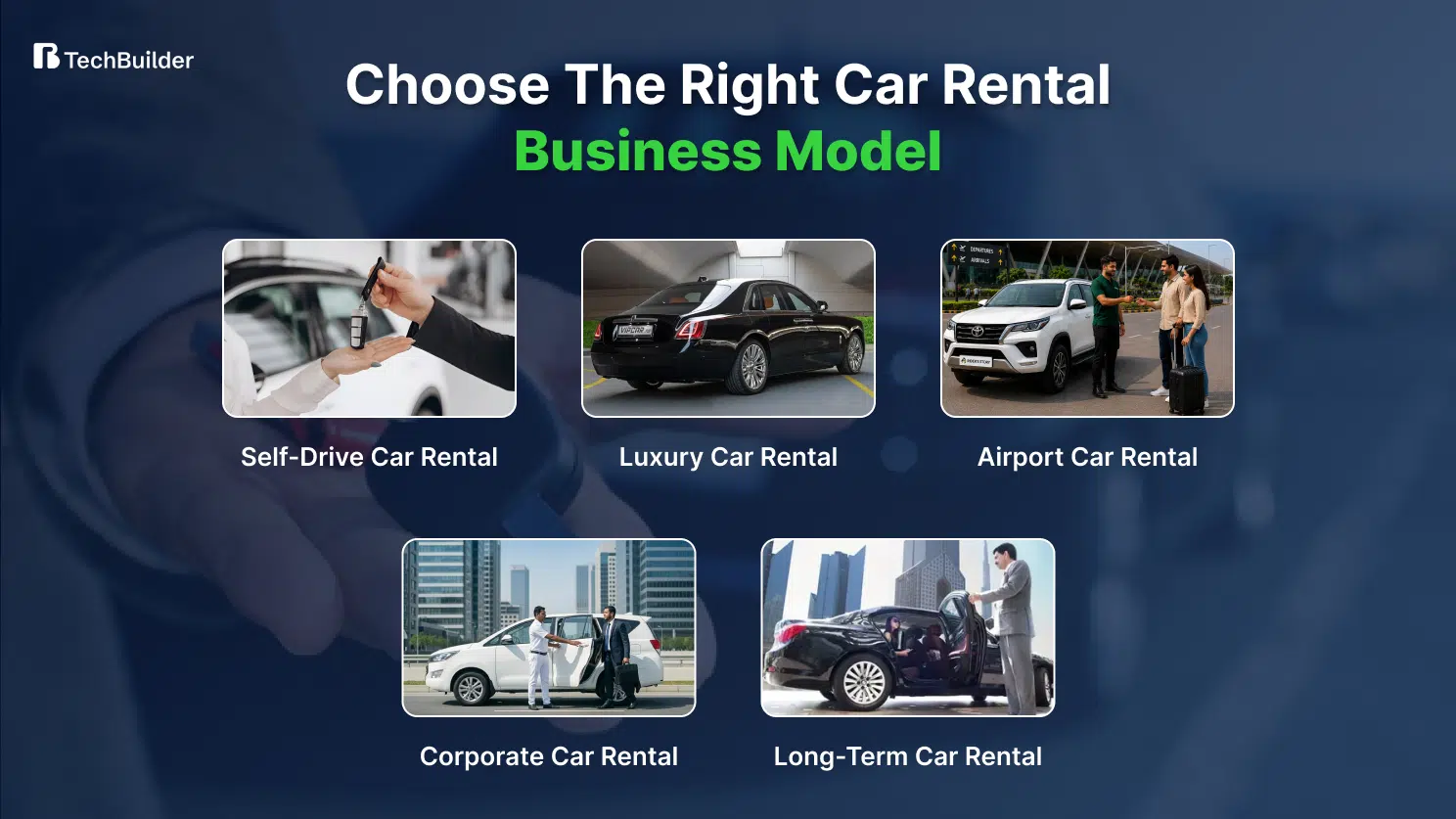
Before investing in vehicles, decide exactly what kind of rental business you want to build.
Self-Drive Car Rental
Customers rent vehicles and drive them themselves. This model can work well in tourist destinations and urban areas where people need flexible transportation without owning a car.
Luxury Car Rental
This model targets customers looking for premium vehicles for weddings, events, business travel, or special occasions. Although the investment per vehicle is higher, rental rates can also be significantly higher.
Airport Car Rental
Airport-focused rentals target travelers who need convenient transportation immediately after arriving at their destination. Partnerships with hotels, travel agencies, airports, and tourism businesses can play an important role.
Corporate Car Rental
Companies may need vehicles for employees, executives, projects, or long-term business requirements. Corporate contracts can provide more predictable revenue than occasional individual bookings.
Long-Term Car Rental
Monthly or extended rentals can help improve fleet utilization and reduce the operational effort associated with constantly finding new short-term customers.
Car Rental Business Model Comparison
| Business Model | Investment Level | Revenue Potential | Best For |
| Self-Drive | Medium | Medium | Tourists and local customers |
| Luxury | High | High | Premium customers and events |
| Airport | Medium-High | Medium-High | Travelers |
| Corporate | Medium | Stable | Businesses and organizations |
| Long-Term | Medium | Stable | Monthly and extended renters |
The best model depends on your location, target customers, available capital, and the type of vehicles you plan to operate.
You can also combine models. For example, you could offer self-drive rentals to tourists while maintaining a separate corporate and long-term rental program.
How to Start a Car Rental Business: A Step-by-Step Guide
Starting a car rental company becomes much easier when you break the process into manageable steps.
Step 1: Research Your Target Market
Start by understanding who will actually rent your vehicles.
Are you targeting:
- Tourists?
- Local residents?
- Corporate customers?
- Airport travelers?
- Families?
- Luxury customers?
- Long-term renters?
Study your local competitors and look at:
- Vehicle categories they offer
- Daily and weekly rental prices
- Customer reviews
- Booking process
- Pickup and delivery options
- Deposit policies
- Mileage limits
- Additional charges
- Cancellation policies
Don’t just copy what competitors are doing. Look for gaps.
For example, if local companies only offer traditional rentals, you could focus on contactless pickup. If luxury rentals dominate the market, you might find an opportunity in affordable long-term rentals.
Your first competitive advantage may simply be understanding your customers better than anyone else.
Step 2: Choose Your Business Model
Once you understand the market, select the rental model that fits your resources and audience.
You don’t necessarily need to start with a large fleet.
A smaller, carefully selected fleet can be easier to manage and test.
Think about:
- Starting budget
- Vehicle acquisition costs
- Expected demand
- Competition
- Maintenance requirements
- Potential rental frequency
- Seasonal demand
- Customer acquisition costs
Starting small can help you learn what customers actually want before investing heavily in your fleet.
Step 3: Create a Practical Business Plan
A business plan gives your idea a financial and operational direction.
Your plan should cover:
- Business objectives
- Target audience
- Revenue model
- Fleet strategy
- Pricing structure
- Marketing plan
- Operating expenses
- Customer acquisition strategy
- Technology requirements
- Growth plans
One important calculation is your break-even point.
For example, if a vehicle costs you money every month through financing, insurance, maintenance, parking, and depreciation, how many rental days do you need to cover those costs?
Understanding this number can help you set realistic prices and avoid expanding your fleet too quickly.
Step 4: Decide Your Fleet Size and Vehicle Types
Your fleet is your biggest revenue-generating asset—and potentially your biggest financial risk.
Choose vehicles based on actual demand rather than personal preference.
You may consider offering:
- Economy cars
- Sedans
- SUVs
- Luxury vehicles
- Electric vehicles
- Vans or larger passenger vehicles
A balanced fleet can help you serve different customer segments without putting too much capital into one vehicle category.
Also consider the total cost of ownership, not just the purchase price.
Fuel efficiency, maintenance, depreciation, insurance, financing, and resale value can all affect your long-term profitability.
Step 5: Complete Legal, Licensing, and Insurance Requirements
The legal requirements for a rental business vary by country, state, and city.
Depending on your location, you may need:
- Business registration
- Commercial insurance
- Vehicle registration
- Rental agreements
- Local permits
- Tax registration
- Customer identity verification
- Compliance with local transportation regulations
Insurance deserves particular attention.
Rental vehicles may face different risks compared with privately owned vehicles, so appropriate commercial coverage is essential.
Before launching, consult qualified local legal and insurance professionals to understand the rules that apply to your business.
Step 6: Set Your Rental Pricing
Pricing your vehicles too high can reduce bookings.
Pricing too low can leave you with revenue that doesn’t cover your operating costs.
A practical pricing strategy should consider:
- Vehicle type
- Rental duration
- Local competition
- Seasonal demand
- Weekend vs. weekday demand
- Insurance and operating costs
- Mileage limits
- Security deposits
- Pickup and delivery fees
- Additional services
You can also experiment with dynamic pricing during periods of high demand.
For example, prices may increase during:
- Holidays
- Festivals
- Major events
- Tourist seasons
- Weekends
- Airport travel peaks
The goal is to find the balance between competitive pricing and healthy margins.
As your business grows, software and AI-powered analytics can help you identify demand patterns and make more informed pricing decisions.
Step 7: Build Your Car Rental Website, Mobile App, and Management Platform
Imagine a customer wants to rent a car at 11 p.m.
They don’t want to call your office, wait for someone to respond, and ask whether a vehicle is available. They expect to search, compare, book, and pay from their phone.
Your digital infrastructure should make that journey simple while giving your team the tools needed to manage the business efficiently.
Customer-Facing Features
Your website or mobile app should allow customers to:
- Browse available vehicles
- Check real-time availability
- Select rental dates
- Choose pickup and drop-off locations
- View pricing
- Make reservations
- Complete secure online payments
- Modify bookings
- Receive booking confirmations
- Access rental history
- Receive notifications
Fleet and Business Management
Your internal team should be able to:
- Track vehicle availability
- Manage bookings
- Monitor rental status
- Manage vehicle categories
- Track vehicle locations
- Manage maintenance
- Organize customer information
- Monitor fleet utilization
- Manage pricing
Admin Dashboard and Analytics
An admin dashboard can provide visibility into:
- Active bookings
- Vehicle availability
- Revenue
- Customer activity
- Fleet performance
- Cancellations
- Maintenance
- Business analytics
As your business grows, digital tools can help reduce manual work and prevent issues such as double bookings, outdated vehicle availability, and disconnected payment records.
The goal isn’t simply to “have an app.”
The real goal is to create a connected digital ecosystem that makes the rental experience easier for customers and the operation more efficient for your team.
Step 8: Market Your Car Rental Business
Having a fleet doesn’t guarantee bookings.
You need a strategy to put your vehicles in front of the right audience and build enough trust to turn visitors into paying customers.
Consider:
- Local SEO
- Google Business Profile optimization
- Google search advertising
- Social media marketing
- Travel partnerships
- Hotel partnerships
- Airport partnerships
- Corporate partnerships
- Referral programs
- Customer loyalty offers
- Email campaigns
- Remarketing campaigns
Don’t overlook customer reviews.
For a rental business, trust matters. Customers are handing over money, personal information, and sometimes significant security deposits.
Positive reviews, transparent pricing, clear rental agreements, and responsive customer service can make a major difference when customers compare your business with competitors.
Step 9: Track Performance and Scale
Once your business is running, track the numbers that actually matter.
Monitor:
- Fleet utilization
- Revenue per vehicle
- Average rental duration
- Booking conversion rate
- Customer acquisition cost
- Repeat booking rate
- Cancellation rate
- Maintenance expenses
- Average revenue per booking
- Customer lifetime value
- Vehicle downtime
- Customer retention rate
These metrics can tell you which vehicles are performing well and which ones are tying up capital.
For example, if one SUV category consistently achieves higher utilization and revenue than another vehicle category, the data may suggest where your next fleet investment should go.
Scale based on evidence—not assumptions.
Can You Start a Car Rental Business With 1–5 Cars?
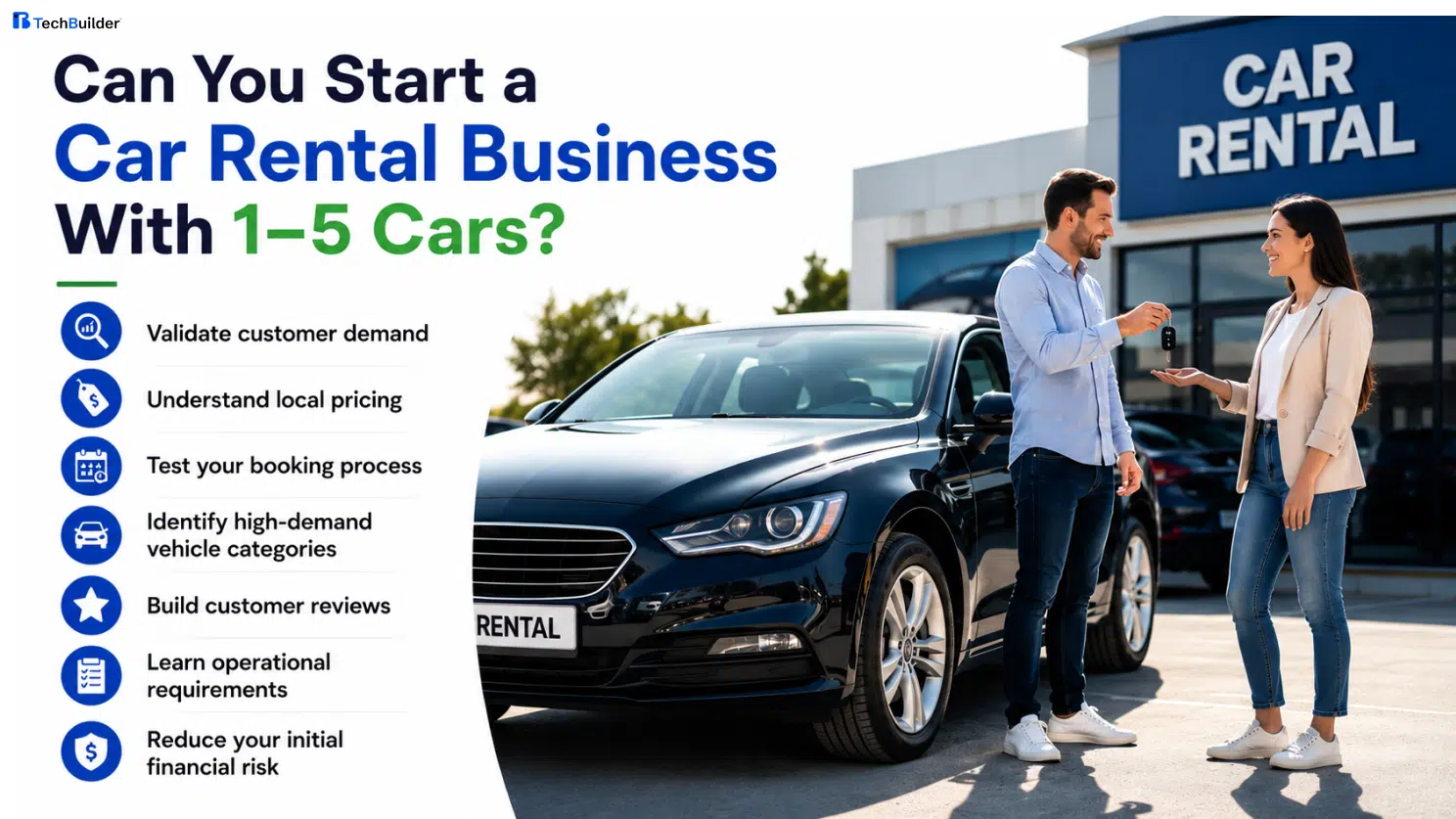
Yes, you don’t necessarily need a large fleet to test your business model.
Starting with 1–5 vehicles can allow you to:
- Validate customer demand
- Understand local pricing
- Test your booking process
- Identify high-demand vehicle categories
- Build customer reviews
- Learn operational requirements
- Reduce your initial financial risk
You can also consider leasing vehicles, partnering with vehicle owners where legally and operationally appropriate, or starting with a focused niche.
For example, instead of offering every vehicle type, you could initially specialize in:
- Affordable economy rentals
- SUV rentals
- Airport rentals
- Corporate rentals
- Luxury rentals
- Long-term rentals
Once you identify a profitable niche, you can gradually expand your fleet.
The key is to grow according to demand rather than buying vehicles simply because you have access to capital.
Should You Buy or Lease Cars for Your Rental Business?
Both options have advantages and disadvantages.
Buying Vehicles
Advantages:
- Full ownership
- Greater control over the fleet
- Potential resale value
- No lease mileage restrictions
- More flexibility in fleet management
Disadvantages:
- Higher upfront investment
- Depreciation risk
- Capital tied up in vehicles
- You carry the full resale risk
Leasing Vehicles
Advantages:
- Lower initial capital requirements
- Easier to expand the fleet
- Potentially newer vehicles
- More predictable vehicle replacement cycles
Disadvantages:
- Mileage restrictions may apply
- Contract limitations
- Possible additional fees
- You don’t own the asset
The right choice depends on your capital, growth strategy, expected mileage, and local financing options.
For a new business, leasing may reduce the initial capital burden, while buying can offer more long-term control.
Always review the terms of commercial vehicle leases carefully before using leased vehicles for rental purposes.
How Much Does It Cost to Start a Car Rental Business?

The cost of starting a car rental business can vary significantly depending on your fleet size, vehicle types, location, insurance requirements, technology, and business model.
A small 1–5 vehicle operation may require significantly less capital than a large premium or multi-location rental company.
Instead of looking at one fixed startup cost, it’s more useful to consider your business size and growth stage.
Small Car Rental Business: 1–5 Cars
A small operation may require investment in:
- Vehicle purchases or down payments
- Business registration and licensing
- Commercial insurance
- Basic website and booking system
- Parking or storage
- Branding
- Initial marketing
- Cleaning and maintenance
This model can be suitable for entrepreneurs who want to test local demand before investing in a larger fleet.
Medium Car Rental Business: 10–25 Cars
A growing operation may require additional investment in:
- A larger and more diverse fleet
- Higher insurance coverage
- Fleet management software
- Advanced booking systems
- Staff
- Vehicle storage
- Marketing and customer acquisition
- Maintenance infrastructure
Large or Multi-Location Car Rental Business
Larger businesses may need significant investment in:
- Large vehicle fleets
- Multiple rental locations
- Advanced fleet management
- Telematics and GPS tracking
- Mobile applications
- Integrated payment systems
- Staff and operations
- AI-powered analytics
- Advanced customer management
One-Time Startup Costs
| Expense | Estimated Cost |
| Vehicle Purchase or Down Payments | $20,000–$150,000+ |
| Business Registration & Licensing | $500–$5,000 |
| Office & Location Setup | $5,000–$30,000+ |
| Website & Booking System | $2,000–$10,000+ |
| Mobile App | $5,000–$30,000+ |
| Branding & Initial Setup | $1,000–$5,000+ |
Recurring Costs
| Expense | Typical Cost |
| Commercial Insurance | $2,000–$10,000+ annually |
| Vehicle Financing | Varies by fleet |
| Maintenance & Repairs | Varies by vehicle |
| Cleaning & Detailing | Varies by rental volume |
| Parking & Storage | Varies by location |
| Marketing | Varies by acquisition strategy |
| Software & Technology | Varies by platform |
| Staff | Varies by business size |
Note: These are broad planning estimates and can vary significantly by market and business model. Technology costs can also differ depending on whether you choose SaaS software, a white-label platform, or custom car rental software.
You don’t need to invest in everything upfront. Starting with a smaller fleet, a focused customer segment, and essential digital tools can help you test demand and scale gradually.
Car Rental Industry Trends to Watch in 2026
The car rental industry is becoming increasingly digital, data-driven, and customer-focused. In 2026, businesses that combine convenient digital experiences with smarter fleet and pricing
strategies may be better positioned to compete.
Here are the key trends to watch.
AI-Powered Dynamic Pricing
Instead of relying only on fixed rates, rental companies can use demand data to identify opportunities for price optimization.
AI-powered systems can potentially analyze:
- Seasonal demand
- Local events
- Vehicle availability
- Booking patterns
- Customer behavior
- Competitor pricing
This can help businesses make more informed pricing decisions while balancing utilization and profitability.
AI Demand Forecasting
AI can help predict when certain vehicle categories may experience higher demand.
For example, SUVs may perform better during holidays, while economy vehicles may have stronger demand in urban markets.
Better forecasting can help businesses make smarter fleet purchasing and leasing decisions.
Connected Vehicles and Telematics
GPS and telematics can provide businesses with greater visibility into vehicle locations, usage, mileage, and operational performance.
These technologies can support:
- Fleet tracking
- Vehicle utilization monitoring
- Route visibility
- Maintenance planning
- Operational efficiency
Electric Vehicle Rentals
As EV adoption continues to grow, rental companies may have opportunities to add electric vehicles to their fleets.
However, businesses should consider:
- Charging infrastructure
- Charging time
- Customer education
- Vehicle range
- Maintenance requirements
- Local EV demand
EVs may not be the right fit for every market, but they are becoming an increasingly relevant fleet consideration.
Contactless and Keyless Rentals
Customers increasingly value convenience.
Digital identity verification, online agreements, mobile check-in, and keyless vehicle access can reduce friction in the rental process where local regulations and operational requirements allow.
Predictive Fleet Maintenance
Data and telematics can help rental businesses monitor vehicle conditions and identify potential maintenance needs before major issues occur.
This can help reduce unexpected downtime and keep vehicles available for bookings.
Automated Damage Inspection
Digital inspection workflows, photographs, and AI-assisted image analysis may help businesses document vehicle condition before and after rentals.
When implemented appropriately, these tools can improve transparency and help reduce disputes.
Car Rental Subscriptions
Monthly and flexible subscription models are another opportunity for businesses targeting customers who need vehicles for longer periods but don’t want traditional ownership commitments.
The exact economics depend on vehicle depreciation, mileage, insurance, maintenance, and customer demand.
How AI Can Help Grow Your Car Rental Business in 2026
As your fleet expands, making decisions based only on intuition becomes increasingly difficult.
AI and analytics can help you understand:
- Which vehicles generate the most revenue
- Which vehicles have the highest utilization
- When demand is likely to increase
- Which customers are likely to return
- When maintenance may be required
- Which pricing strategies perform best
- Where your marketing budget generates the highest returns
For example, if data shows that SUVs consistently achieve higher utilization and revenue than sedans in your market, you may decide to allocate more of your future fleet investment toward SUVs.
The businesses that grow sustainably are often the ones that stop guessing and start using data to guide their decisions.
How to Grow Your Car Rental Business
Starting is one challenge.
Growing without losing control is another.
Once you have a stable customer base, focus on improving the areas that directly influence revenue and customer retention.
Improve the Customer Experience
Make every step easier—from searching for a vehicle to returning it.
Clear pricing, simple booking, fast communication, and transparent policies can encourage customers to return.
Expand Your Fleet Strategically
Don’t add vehicles simply because your business is growing.
Look at booking data and identify the categories customers are actually requesting.
Offer Flexible Rental Plans
Daily rentals aren’t your only option.
Weekly, monthly, corporate, and subscription-style packages can help attract customers who need vehicles for longer periods.
Build Customer Loyalty
Repeat customers can be valuable for reducing acquisition costs.
Consider:
- Loyalty rewards
- Referral programs
- Personalized offers
- Returning customer discounts
- Corporate account benefits
Create Strategic Partnerships
Hotels, travel agencies, airports, tour operators, event companies, and businesses can become valuable sources of recurring bookings.
Use Data to Make Better Decisions
Your booking and fleet data can help you understand demand patterns, identify profitable vehicle categories, and optimize pricing.
Automate Repetitive Operations
As your business grows, automate tasks such as:
- Booking confirmations
- Payment notifications
- Rental reminders
- Customer communications
- Vehicle status updates
- Maintenance alerts
Automation can reduce manual work and allow your team to focus on customer service and business growth.
Expand to New Locations Carefully
Expanding into a new location can create new revenue opportunities, but growth should be based on data rather than assumptions.
Before entering a new market, evaluate:
- Local demand
- Competition
- Fleet utilization potential
- Customer acquisition costs
- Vehicle availability
- Insurance and regulatory requirements
- Operational capacity
Prove that your business model works in one market before rapidly expanding into multiple locations.
Essential Features to Consider in Car Rental Software
If you’re planning to digitize your rental operations, consider the features your customers and internal teams actually need.
Some commonly useful capabilities include:
Customer-Facing Features
- Vehicle search
- Real-time availability
- Online booking
- Flexible date selection
- Multiple pickup and drop-off locations
- Secure online payments
- Booking modifications
- Digital rental agreements
- Notifications
- Rental history
Business & Admin Features
- Fleet management
- Vehicle availability tracking
- Customer management
- Pricing management
- Booking management
- Payment tracking
- Maintenance management
- Reports and analytics
- Revenue monitoring
- User and staff management
Advanced Features
Depending on your business model, you may also consider:
- AI-powered pricing
- Demand forecasting
- GPS and telematics integration
- Keyless vehicle access
- Digital identity verification
- Automated damage inspection
- Predictive maintenance
- Multi-location management
- Corporate account management
The exact feature set should depend on your business model.
A small local rental company may need a simpler system, while a multi-location rental business may require advanced fleet, pricing, and operational capabilities.
Conclusion
A successful car rental business isn’t built by simply putting vehicles on the road.
It starts with understanding the market, choosing the right business model, building a profitable fleet, setting smart prices, and creating an experience customers trust.
The market opportunity is significant, but success still comes down to execution.
You need to keep your fleet productive, your costs under control, your customers satisfied, and your operations efficient.
In 2026, technology can play an increasingly important role in achieving those goals. From online booking and digital payments to AI-powered demand forecasting, dynamic pricing, predictive maintenance, and fleet analytics, the right technology can help rental companies make better decisions and scale more efficiently.
The best time to think about your digital infrastructure isn’t necessarily after your business becomes complicated.
Planning for scalability early can help you avoid operational bottlenecks later.
So, if you’re sitting on a car rental business idea, the next question isn’t just:
“How many cars should I buy?”
It’s:
“What kind of rental business do I want to build—and how will I make it easy for customers to choose, book, and return my vehicles?”
Frequently Asked Questions
Is a car rental business profitable?
It can be, but profitability depends on fleet utilization, pricing, operating costs, customer acquisition, and the business model you choose. A vehicle that stays booked consistently can generate recurring revenue, while idle vehicles can quickly increase costs.
How much does it cost to start a car rental business?
Startup costs vary significantly. Your biggest expenses are typically vehicles, insurance, licensing, technology, marketing, and maintenance. A small fleet can require significantly less capital than a large premium or multi-location operation.
Is a car rental business a good investment in 2026?
A car rental business can be a good investment in 2026 if you manage fleet utilization, pricing, operating costs, customer demand, and technology effectively.
How much can a car rental business make?
Revenue depends on fleet size, rental rates, utilization, location, vehicle category, and seasonality. For example, a 10-car fleet averaging $70 per rental day with approximately 70% utilization could generate around $14,700 in gross monthly rental revenue before operating expenses. Actual results can vary significantly.
Can I start a car rental business with 1–5 cars?
Yes. Starting with a smaller fleet can help you test market demand, understand customer preferences, build reviews, and learn operational processes before making a larger investment.
What is the best car rental business model?
There isn’t one model that works for everyone. Self-drive, luxury, airport, corporate, and long-term rentals can all work depending on your location, target audience, competition, and available resources.
Is it better to buy or lease rental cars?
Both options have advantages. Buying provides ownership and greater control but requires more upfront capital. Leasing may reduce initial investment and make fleet expansion easier but can come with mileage and contract restrictions. The right choice depends on your business strategy and local market.
How many cars do I need to start a rental business?
There is no fixed number. Some entrepreneurs start with one to five vehicles to test demand, while larger operations may launch with dozens of vehicles. Starting with a smaller fleet can reduce financial risk and help you validate your business model.
How do I calculate fleet utilization?
Fleet utilization can be calculated by dividing the number of days a vehicle is rented by the number of days it is available and multiplying the result by 100.
For example, if a vehicle is rented for 20 days out of 30 available days:
20 ÷ 30 × 100 = 66.7% utilization
Do I need car rental software?
A small operation may initially manage bookings manually, but as the fleet and customer base grow, digital software can help manage reservations, vehicle availability, payments, customer information, maintenance, and reporting more efficiently.
How can AI improve car rental operations?
AI can help analyze demand patterns, support pricing decisions, forecast vehicle demand, identify maintenance needs, personalize customer offers, and improve fleet utilization. The exact benefits depend on the data available and how the technology is implemented.
How can I get more car rental bookings?
Focus on a combination of local SEO, paid advertising, partnerships, positive customer reviews, referral programs, social media, and a simple online booking experience. The best strategy depends on your target customers and location.
What technology should a car rental business invest in first?
Start with technology that solves your most immediate operational challenges. For many businesses, this may include an online booking system, fleet management, secure payments, customer management, and an admin dashboard. As the business grows, you can add advanced capabilities such as AI analytics, dynamic pricing, telematics, and predictive maintenance.
What are the best cars to buy for a rental business?
The best rental cars are reliable, fuel-efficient, affordable to maintain, and in demand locally. Economy cars, SUVs, sedans, and EVs can be strong options.
How can I start a car rental business without owning a large fleet?
Start with one to five vehicles, lease cars, partner with vehicle owners, or focus on a specific niche before expanding based on proven customer demand.