











In 2026, startups are pouring resources into the development of taxi apps to tap into a mushrooming global ride-hailing industry anticipated to be more than $332 billion. Powered by the expectations of Gen Z to choose instant, digital-first, and secure services, these apps are highly profitable due to real-time tracking, dynamic pricing based on AI and niche or specialized and eco-friendly services model.
The statistical insights give a compelling industry narrative. According to Statista’s 2025 report, the global ride-hailing market is expected to hit $188.60 billion in 2026 and is projected to surge to $229.98 billion by 2030, growing at a CAGR of 5.08%. Some more insightful numbers are listed below.
- The ride-hailing singularity captures the market size, which is projected to reach $181.54 billion in 2030.
- Rising Urban Penetration and usage, with around 51% of 18 to 35-year-olds being core users of taxi apps.
- South America is the fastest-growing mobility market globally, growing at a CAGR of 16.43%.
- Corporate accounts for rising growth rates, inclining towards shared mobility, increasing at a CAGR of 16.36% for ESG reporting, and managing emission data.
- Super Apps make notable shifts in the growth of taxi apps, with a dynamic ecosystem that includes multiple vehicle options, autonomous vehicle partnerships, and enterprise contracts.
- The battery-electric vehicles are gaining increased traction in the ride-hailing industry, growing at a CAGR of 16.55% through 2031.
- By 2026, the ride-hailing industry is witnessing an agile transformation to the autonomous ride segment, expanding at a CAGR of 16.6% with strategic partnerships in 2026.
Key Reasons Why Startups Are Investing in Taxi App Development in 2026
The rapid evolution of the digital mobility ecosystem is one of the biggest reasons startups are investing in taxi app development in 2026. As urban transportation becomes more technology-driven, startups see a strong opportunity to launch scalable ride-hailing platforms that meet modern consumer expectations. With growing smartphone penetration, digital payments, and demand for on-demand services, taxi apps are becoming essential tools for efficient mobility solutions.
Taxi app platforms represent a business and investment prospect of strong market growth, recurrent revenue opportunity, and long-term scalability – to the entrepreneur and investors. Startups can also implement new features on these platforms, like AI-based route optimization, the integration of electric vehicles, and personalized ride experiences. Consequently, the taxi application market is emerging as one of the most lucrative businesses in the on-demand economy.
Some of the driving factors of this massive investment in the year 2026 are:
- Market Development and Demand: The ride-hailing market is rapidly growing, with the CAGR estimated at approximately 7, which leaves open significant opportunities to the startups to develop profitable mobility platforms and gain on the increasing user demand.
- Focusing on Gen Z and Digital Consumers: Gen Z and digitally native consumers demand instant and app-based services offering convenience, transparency, and cashless payments, which causes the shift of conventional taxi services.
- Advanced Features and Customization: New taxi applications are transforming to become smart mobility applications that combine AI-based price calculations, live tracking, safer driving features, and custom ride experiences to users.
- Affordability of Technology: The availability of ready-made and white-label taxi app solutions allows startups to enter the market quickly with lower development costs, making the business model more accessible.
- Niche Market Opportunities: Startups are considering niche mobile services like corporate rides, inter-city transport, women-oriented transport, and senior citizen transport.
- Improved Operational Efficiency: Taxi apps help to improve the operational efficiency based on real time driver allocation, intelligent route management, and automated dispatching systems to minimize idle time and maximize the revenue of the platform.
Ready to Launch Your Own Taxi App in 2026?
Take advantage of the booming ride-hailing market with a powerful and scalable taxi platform. Our experts at TechBuilder help startups build feature-rich taxi apps with AI-powered pricing, real-time tracking, and seamless driver management.
Increasing Demand for On-Demand Ride-Hailing Services
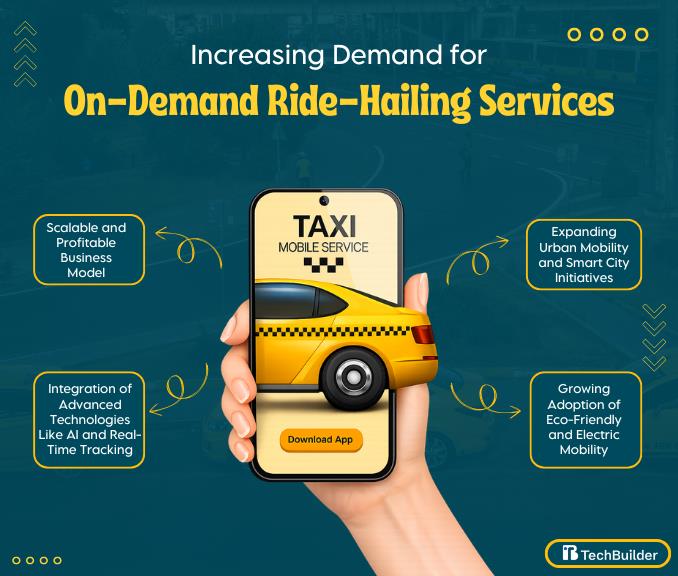
Customers are now inclined towards immediate services which could be accessed directly on their smart phones. Taxi apps enable people to order cars in a few seconds, locate drivers on the map, and book in cash. This has been of great benefit in promoting the use of ride-hailing services across the globe. In the case of startups, such an expansion in demand is a huge opportunity to develop digital mobility solutions, which will meet the requirements of modern transport.
- Scalable and Profitable Business Model
Taxi apps follow a highly scalable model by which a startup can initially have a small amount of fleet and be able to grow slowly. Ride commissions, surge pricing, driver subscriptions, and in-app adverts can be used to create revenue. The more the users, the more profitable the platform and the largely automated processes of operation through technology.
- Integration of Advanced Technologies Like AI and Real-Time Tracking
Taxi applications of the modern world are driven by the power of the latest technologies like artificial intelligence, GPS positioning, and dynamic pricing algorithms. Such technologies assist in the optimization of routes, shortening of the waiting time, and the enhancement of the overall efficiency of the work. These tools can allow startups that invest in the development of taxi apps to provide smarter mobility solutions and gain a competitive edge on the market.
- Growing Adoption of Eco-Friendly and Electric Mobility
Sustainability in the environment is emerging as one of the priorities in the transportation sector world over. With the aim to lower the level of carbon emission and the cost of operation, many ride-hailing startups now introduce the use of electric cars to their fleets. This green mobility is not only environmentally friendly but also appealing to the customers who are environmentally conscious.
- Expanding Urban Mobility and Smart City Initiatives
Rapid urbanization has created new transportation challenges, including traffic congestion and inefficient public transit systems. Taxi apps will be significant to address these issues because they provide a flexible and – trustworthy way of getting mobility. Governments and smart city initiatives are also – encouraging digital mobility platforms, creating favorable conditions – for startups entering the taxi app industry.
How Taxi App Development Creates Scalable Startup Business Models
The development of taxi apps gives startups a very scalable and flexible business model which can be expanded exponentially as the number of users grows. Taxi apps use digital technology that ensures that riders and drivers are matched effectively unlike the traditional forms of taxi businesses that demand massive investments in the form of fleet, offices and manual operation. The technology-based solution enables startups to broaden their services to cities and regions without incurring a significant increase in the cost of operation.
Taxi apps can also help startups support thousands of rides at the same time and avoid wasting money on hiring more staff by using cloud-based systems, automation, and digital payments. Along with the growth of the platform, startups may introduce new features, services, and alliances that can create new sources of revenue and reinforce the market positions.
The following are some of the major aspects that make taxi app business models highly scalable:
- Multi-City and Multi-Region Expansion Capabilities
Taxi apps allow startups to expand their services to new cities without the need for large physical infrastructure. Once the platform is created, one can replicate the technology in other regions, which is cheaper and quicker due to the expansion.
- Commission-Based Revenue Model
Most taxi apps operate on a commission-based structure where the platform earns a percentage from every ride booked through the app. As the number of rides increases, revenue grows automatically without requiring additional operational investment.
- Partnership Opportunities with Independent Drivers
Instead of owning a fleet of vehicles, startups can partner with independent drivers who register on the platform. This reduces upfront investment and helps the platform grow quickly by increasing the availability of drivers.
- Integration with Multiple Mobility Services
Taxi apps can expand beyond traditional ride-hailing by adding services such as carpooling, bike taxis, luxury rides, airport transfers, and delivery services. This diversification increases revenue opportunities and attracts a broader user base.
- Automated Operations and Reduced Operational Costs
Automation plays a major role in scalability. Automated dispatch system, digital pay, route optimization and driver management tools will minimize the need in manual operation and enhance efficiency.
The Role of AI and Smart Technologies in Modern Taxi Apps
Taxi apps are becoming intelligent mobility platforms due to artificial intelligence and intelligent technologies. These technologies can be used – to enhance ride efficiency, user experience, and maximize the performance of the platform. Taxi apps may be used to evaluate massive volumes of data in real time using AI-powered tools – to make better operational decisions.
From predicting ride demand to optimizing driver allocation, AI helps taxi platforms deliver faster and more reliable services. To stay competitive and deliver advanced mobility solutions, startups that invest in the development of taxi apps are gradually switching to the introduction of smart technologies.
The important technologies that drive the modern taxi apps include:
- AI-Powered Dynamic Pricing Systems
Dynamic pricing algorithms respond to the demand, traffic conditions, weather, and peak hours, and automatically adjust the prices of rides. This will assist in stabilizing demand by riders and driver supply and ensure the platform earns maximum.
- Real-Time GPS Tracking and Route Optimization
The GPS technology will allow riders and drivers to monitor rides as they go. The route optimization tools are also useful to make the drivers select the quickest and most effective routes that reduce the time of travelling and the amount of fuel consumed.
- Smart Driver-Passenger Matching Algorithms
The matching systems that rely on AI ensure that riders can be matched with the closest drivers within a short period of time. This saves on time that passengers would have waited to be served, and ride completion among drivers.
- Predictive Demand Analysis
AI is able to work out historical ride data and forecast high demand zones at certain times of the day. This enables taxi platforms to have the drivers in strategic positioning so that they can offer faster services during rush hours.
- Advanced Safety and Fraud Detection Systems
The current taxi applications operate on AI-driven surveillance to identify suspicious behavior, driver authentication, and passenger security. Such systems create confidence among the users and enhance the general credibility of the platform.
Turn Your Taxi Business Idea into a Scalable App Platform
Whether you want to build an aggregator model, a corporate ride platform, or an EV-based taxi service, TechBuilder provides fully customizable taxi app development solutions tailored for startups.
Revenue Opportunities in the Taxi App Business
The development of taxi apps has many sources of revenue to startups as it presents one of the most profitable markets within the on-demand mobility sector. As opposed to the old fashioned taxi companies that can only make money by charging customers to ride, the new taxi applications are able to make money in different ways achieved through various monetization mechanisms within the application. These sources of revenue enable startups to create sustainable business models as they continually expand on their operations.
As the demand of the ride-hailing services increases, the startups may use the online platforms to maximize the profits in terms of commissions, subscriptions and value added services. Through appropriate monetization strategy the taxi app businesses can be assured of steady revenue growth without having to charge excessive prices to users.
Some of the most common revenue opportunities in the taxi app business include:
- Commission from Each Ride
Commission charge on each ride is the most widespread mode of revenue in taxi apps. The platform charges a percentage of ride fare with the rest going to the driver. This type of model gives the platform steady revenue as the number of ride volumes rises.
- Surge or Dynamic Pricing During Peak Demand
Taxi apps can increase fares during high-demand periods such as rush hours, holidays, or bad weather conditions. Dynamic pricing guarantees the availability of a greater number of drivers as well as enables the platform to maximize its profits in case of high demand.
- Driver Subscription or Registration Fees
There are taxi platforms where a driver has to pay a subscription fee every month or year to be able to use the taxi platform and get the requests to complete rides. This model will guarantee the company a recurring revenue and also enable the drivers to enjoy steady rides.
- In-App Advertisements and Partnerships
In-app adverts are advertisements displayed on apps like Facebook or Twitter, typically situated in the lower hand corners of the screen. In-App Advertisement and Partnerships In-app adverts are those adverts that appear on apps such as Facebook or Twitter, normally in the lower hand corners of the screen.
- Premium Ride Services and Additional Features
Offering premium services such as luxury rides, airport transfers, priority bookings, or corporate ride packages can create new revenue channels. These value-added services attract high-paying customers and increase overall platform profitability.
Popular Taxi App Business Models for Startups
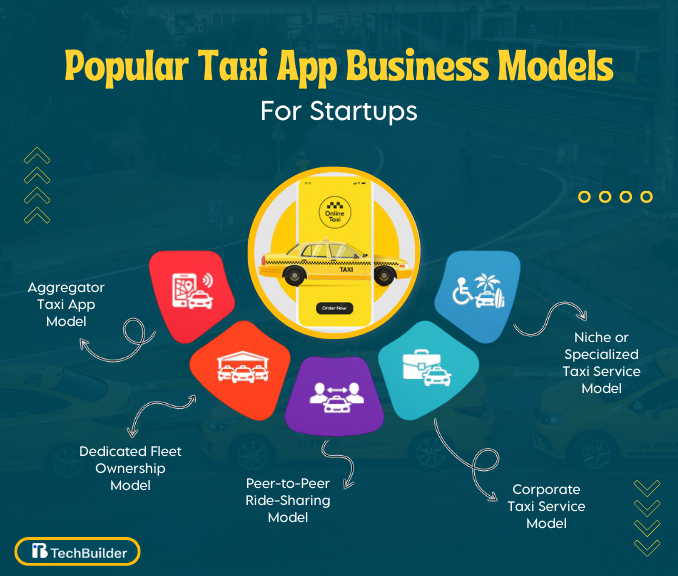
Startups entering the ride-hailing industry can choose – from several taxi app business models depending on their target audience, market demand, and available resources. All models have their own benefits and profitability opportunities, and startups can develop new mobility solutions.
Choosing the appropriate business model assists the startups in establishing how they will provide their services, their business structure and their future expansion plan. Several successful taxi apps are a combination of numerous models to form a rich and competitive mobility ecosystem.
Some of the most popular taxi app business models for startups include:
- Aggregator Taxi App Model
This is the most prevalent business model in which the platform will connect passengers and independent drivers. The company does not possess vehicles but it makes money on the basis of ride commission. This model involves minimum start-up and has the ability to be rapidly scaled.
- Dedicated Fleet Ownership Model
In this model, there is the ownership and control of its own fleet of vehicles and drivers. Although the investment at this point is more significant, it gives more control in the quality of the services, the price and the management of drivers.
- Peer-to-Peer Ride-Sharing Model
This model allows private vehicle owners to offer rides to passengers traveling in the same direction. It promotes shared mobility, reduces transportation costs, and supports sustainable travel options.
- Corporate Taxi Service Model
Some startups focus on providing transportation solutions specifically for businesses and corporate clients. Businesses have the ability to reserve rides, airport transfers and business travel through corporate accounts.
- Niche or Specialized Taxi Service Model
Startups are also entering into certain market niches, including women-only rides, transportation of older people, luxury ride service, and taxi-based platforms using electric vehicles. These niche services make a business be unique in the competitive market as it seeks to meet a certain need of a customer.
Essential Features Every Successful Taxi App Must Have
An effective taxi application should provide an effortless and trustworthy experience to the riders and the drivers. Startups in a competitive ride-hailing sector should create platforms that are easy to use, safe, and efficient. Contemporary taxi applications are built in such a way that offers high-tech features that make it easier to book a ride and enhance communication between drivers and passengers, as well as provide hassle-free boarding and alighting of a trip.
Incorporating the crucial features in the platform, startups will be able to maximize the satisfaction of their users, boost the number of rides, and develop the loyalty of their customers. These characteristics are also useful in streamlining operations, minimizing manual work, and general performance of the mobility platform.
Some essential features every successful taxi app must include:
- Easy User Registration and Profile Management
Taxi applications need to provide easy methods of registration using mobile numbers, email addresses, or social logins. An easy profile management system enables customers to store individual information, payment options and past performance to enable them make a quicker booking process.
- Real-Time GPS Tracking and Route Navigation
The GPS tracking will also allow the passengers to track their ride in real time whilst also allowing the drivers to use efficient routes by utilizing the most optimized routes. This is an advantage as it enhances visibility and makes the users feel secure and updated during the travel.
- Multiple Payment Options and Cashless Transactions
The latest taxi applications embrace various payment systems such as credit cards, debit cards, online banking, digital wallets, and online banking. The cashless payment will make the rides more convenient and safe to the drivers and passengers.
- Smart Ride Booking and Scheduling System
An intelligent booking system will enable people to book a ride instantly or book it to be used later. Such a flexible nature of taxi apps preconditions their use in everyday commute, airport shuttle, and scheduled trip.
- Driver Ratings and Review System
Rating and review functions are used to ensure that the quality of services is upheld because the passenger gets to comment after every ride. The top performing drivers would have increased visibility on the platform and negative feedback serves to enhance the standards of service.
- In-App Communication Between Driver and Passenger
Taxi applications usually contain an inbuilt chat or calling application that enables taxi drivers and passengers to easily communicate to each other about the pick up points, directions or updates of the ride.
How to Build a Successful Taxi App for Your Startup

Building a successful taxi app requires a clear strategy, the right technology stack, and a deep understanding of the mobility market. Startups entering the ride-hailing industry must focus on creating a reliable, scalable, and user-friendly platform that meets the expectations of both passengers and drivers. From identifying the target audience to launching the app in the market, every stage of development plays an important role in ensuring long-term success.
An on-demand taxi application is a growing field that startups can compete at with a well-planned application. With an integrated set of innovative features, efficient operations, and effective user experience, startups will be able to create a platform that draws more users and brings in the steady stream of revenue.
The major stages of the development of a successful taxi application are the following:
- Conduct Market Research and Define Your Target Audience
The initial process in the creation of a taxi app is to get to know the market demand and find your target customers. Startups are advised to study transportation issues in the area, preferences of the user and competitor platform in order to develop a service that suits certain market needs.
- Choose the Right Taxi App Business Model
The right business model is critical toward long-term sustainability.Startups can choose from models such as aggregator platforms, fleet-based services, or niche mobility solutions depending on their business goals and available resources.
- Design a User-Friendly App Interface
An easy and user-friendly interface enhances the user experience. Riders and passengers should book rides fast and drivers should not have problems with ride requests and navigation in the app.
- Integrate Essential Features and Technologies
Effective taxi applications should have characteristics of GPS positioning, online payment, trip schedule, driver profiles, and automatic dispatching solution. The efficiency of the platforms can be enhanced further by integrating the latest technologies such as AI and optimizing routes.
- Test the Platform and Launch Strategically
The startups should carefully test the app before its launch to detect and resolve any technical problems. With the help of strategic introduction, marketing activities and driver training, as well as special deals, it is possible to attract early users and create early traction.
Looking for a Reliable Taxi App Development Partner?
TechBuilder specializes in building high-performance taxi apps with advanced features like AI dispatching, dynamic pricing, GPS tracking, and secure payment integration to help startups scale quickly.
Conclusion
Taxi app development has become one of the most promising opportunities for startups looking to enter the rapidly growing on-demand mobility market. Taxi applications are changing the way people travel – owing to increased urbanization and digitalization, as well as the need for convenience. Startups investing in modern ride-hailing platforms can benefit from scalable business models, various income streams, and cutting-edge technology that improve operational efficiency and consumer satisfaction.
As the business evolves with advancements like AI-powered features, electric vehicle integration, and smart mobility solutions, the future of taxi app development is bright.
FAQ’s
- What is taxi app development?
Taxi app development is the process of creating a – mobile platform that connects passengers with drivers for on-demand transportation services. These applications have such functions as – booking a ride, GPS positioning, online payment, and operations with drivers.
- How much does it cost to develop a taxi app?
The development of a taxi app can be determined by the functionality, the technology stack, compatibility with a platform, and the complexity of development. Simple taxi applications can be cheaper, whereas advanced applications that are based on AI and personalized features are more expensive to invest in.
- How long does it take to build a taxi booking app?
The timeline of a taxi app development – can take several months or a few weeks depending – on the complexity of the features, design specifications, and the development methodology.
- What are the essential features of a taxi app?
The features of some of the most important taxi apps encompass user registration, real-time GPS positioning, booking and scheduling of rides and various payment methods, driver ratings as well as in-app communication between drivers and passengers.
- Why are startups investing in taxi app development in 2026?
The taxi app development is being advanced by startups due to the increase in the demand of on-demand transportation, scalable business models, and revenue generated through ride commissions, subscriptions, and premium services.
- Can taxi apps support electric vehicles and eco-friendly mobility?
Yes, taxi apps could be made – eco-friendly and incorporate electric cars and green mobility. Ride services – that are eco-friendly are being initiated by many startups to minimize carbon emissions and promote the use of green transportation.